
I tried VR for the first time and immediately walked into a bookshelf.
You did too. Or you’re about to.
This isn’t some polished tech demo. This is what actually works when you’re standing in your living room, controller in hand, wondering why your arms won’t move like they should.
I’ve set up three different VR systems. I’ve watched friends vomit (and done it myself). I’ve reset tracking six times in one session.
None of that’s in the ads.
You want Gameplay for Beginners Vrstgameplay (not) theory. Not specs. Not “immersive experiences.” You want to know where to stand.
How not to smash your lamp. Why your head hurts after five minutes.
Why do some people get sick and others don’t? What button even is the menu button? Is it okay to play while wearing glasses?
(Yes. But not like that.)
I’ll tell you what to ignore. What to adjust before you start. And how to spot motion sickness before it wins.
No jargon. No hype. Just steps that keep you upright, aware, and playing longer.
You’ll know how to set up your space safely. You’ll understand the controls without memorizing a manual. You’ll walk away ready (not) just hopeful (to) fire up your first real VR game.
Set Up Your VR Space Like You Mean It
I clear my living room before every session. You should too.
Your play space is not optional. It’s the difference between immersion and tripping over your coffee table.
Meta Quest’s Guardian or SteamVR’s Chaperone? They’re your virtual fence. Draw it after you move the chairs, not before.
(Yes, I’ve walked into a bookshelf. Twice.)
Pets? Move them. Cords?
Tape them down or unplug them. That wobbly side table? Out.
Tracking fails when your headset sees clutter (not) your intent.
Wear clothes you can swing your arms in. No belts that dig. No hoodies that block sensors.
And light matters: dim rooms confuse cameras. A lamp beats shadows every time.
You want smooth tracking. You want zero surprise collisions. You want to forget you’re indoors.
And not get hurt doing it.
That starts with space. Not gear. Not settings.
Space.
If you’re new, start here before you even power on. Seriously.
For more Gameplay for Beginners Vrstgameplay, check out Vrstgameplay.
No fancy setup. Just clear floor. Good light.
And your full attention.
VR Controllers Are Not Magic Wands
I held my first VR controller and tried to open a door by waving at it.
It did nothing.
You need to point. Then click. Not wave.
Not shout. Point and click.
The thumbstick moves you. The trigger shoots or grabs. The grip button squeezes things (like) a real hand.
Face buttons? Usually menu or action shortcuts. (Mine once opened my inventory instead of reloading.
I yelled.)
Raycasting is just fancy talk for “pointing a laser from your controller.”
You aim it at a button, a door handle, a coffee cup. You press the trigger and it happens. No cursor.
No hover. Just aim and commit.
Picking up objects feels dumb until it doesn’t. You point, squeeze the grip, and lift. If it floats weirdly?
You’re not gripping hard enough. Or the game’s physics are broken. (They often are.)
Haptics vibrate when you pull a trigger or hit something. It tells you something happened. Without it, VR feels like watching someone else play.
I dropped a virtual glass three times before realizing I had to release the grip to let go. Not just stop holding. Actually let go.
Doors don’t open if you stare at them. Buttons don’t press if you hover. You have to commit.
Gameplay for Beginners Vrstgameplay starts here (not) with settings or graphics (but) with trusting your hands again.
Most people quit because they think the controller should read their mind.
It won’t.
Point. Click. Grab.
Let go. Repeat until it sticks.
How You Actually Move in VR
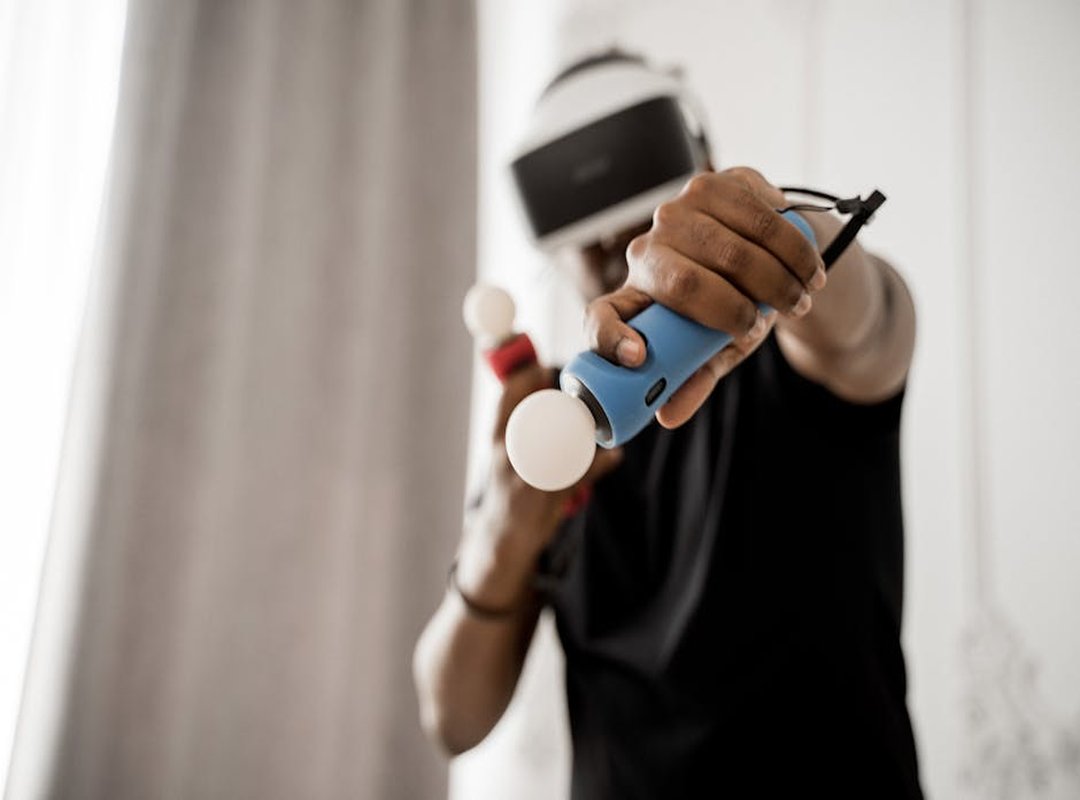
I point. I click. I jump.
That’s teleportation. You aim a reticle, press a button, and zap to that spot.
It feels like cheating. (But it works.)
Most beginners don’t puke doing this. That’s the biggest win.
You lose flow. You break immersion every time you stop and aim. It’s jarring.
Like pausing a movie to ask where the bathroom is.
Smooth locomotion? You push a joystick and walk (or) run. Like you’re really there.
It’s immersive. It’s fluid. It’s how your brain expects movement to feel.
It’s also why half the people I’ve watched try VR grab the headset and say “nope” after thirty seconds.
Motion sickness isn’t rare. It’s common. And it’s personal.
Your friend might handle smooth movement fine. You might not.
Start with teleportation. Every time.
Then test smooth movement in short bursts. Five minutes. Then ten.
See how your stomach reacts.
Some games let you tweak comfort settings. Snap turning instead of smooth rotation. A vignette that darkens the edges when you move fast.
Use them.
They’re not crutches. They’re tools.
If you’re learning VR for the first time, check out the Tutorial for valorant vrstgameplay (it) walks through movement options without assuming you already know what “loco” means.
You don’t need to pick one forever. Try both. Keep what works.
Your body decides. Not the game.
Start Simple. Not Stupid.
I picked up VR and immediately tried a rollercoaster game.
Big mistake.
You’ll feel weird. Your brain won’t believe your eyes yet. That’s normal.
Start with something calm. A puzzle. A walking tour.
A guided art gallery. Not Valorant for beginners vrstgameplay (save) that for week three.
Read the in-game prompts. Seriously. Every title maps buttons differently.
Look for games that say “comfort mode” or “teleport movement” right on the store page.
Skip anything with spinning, flying, or rapid acceleration at first.
You will press the wrong thing and stare at a menu for 90 seconds. (It happens to everyone.)
Take breaks every 15 minutes. Set a timer. Your eyes need rest.
Your inner ear needs mercy.
You don’t have to “get good” fast. VR isn’t a test. It’s a tool.
And tools take practice.
If you feel off? Stop. Sit down.
Breathe. Come back tomorrow.
Most people quit too early because they confuse discomfort with failure. It’s not failure. It’s just your body catching up.
Want to go harder later? Sure. But start where your stomach says yes.
For when you’re ready to level up: Valorant for beginners vrstgameplay
Your First Real VR Moment Starts Now
I remember my first time. Staring at the headset like it might bite me. You felt that too, didn’t you?
That nervous buzz in your chest isn’t a sign you’re not ready.
It’s proof you’re about to do something real.
You don’t need perfect setup. You don’t need hours of prep. You just need to pick up the controllers and move.
The nausea fades. The confusion lifts. Your brain catches up.
Faster than you think.
Gameplay for Beginners Vrstgameplay isn’t about mastering everything today.
It’s about trusting yourself enough to try one thing right now.
Did you skip reading the manual? Good. Most people do (and) still get it working.
Your pain point isn’t hardware or settings.
It’s waiting for permission to begin.
So stop waiting. Plug it in. Turn it on.
Don’t wait for “someday.”
Someday is today.
Go put the headset on. Right now. Before you talk yourself out of it again.
 Gavryth Lornquill serves as a cornerstone of the Jaobvent editorial team, bringing an analytical eye to the ever-shifting landscape of competitive gaming. With a focus on deep-dive strategy and meta-analysis, Gavryth breaks down complex gameplay mechanics into digestible, actionable guides for players of all skill levels. Their dedication to uncovering the technical nuances of digital culture ensures that the community stays ahead of the curve, whether they are navigating the latest patch notes or mastering a new esports title.